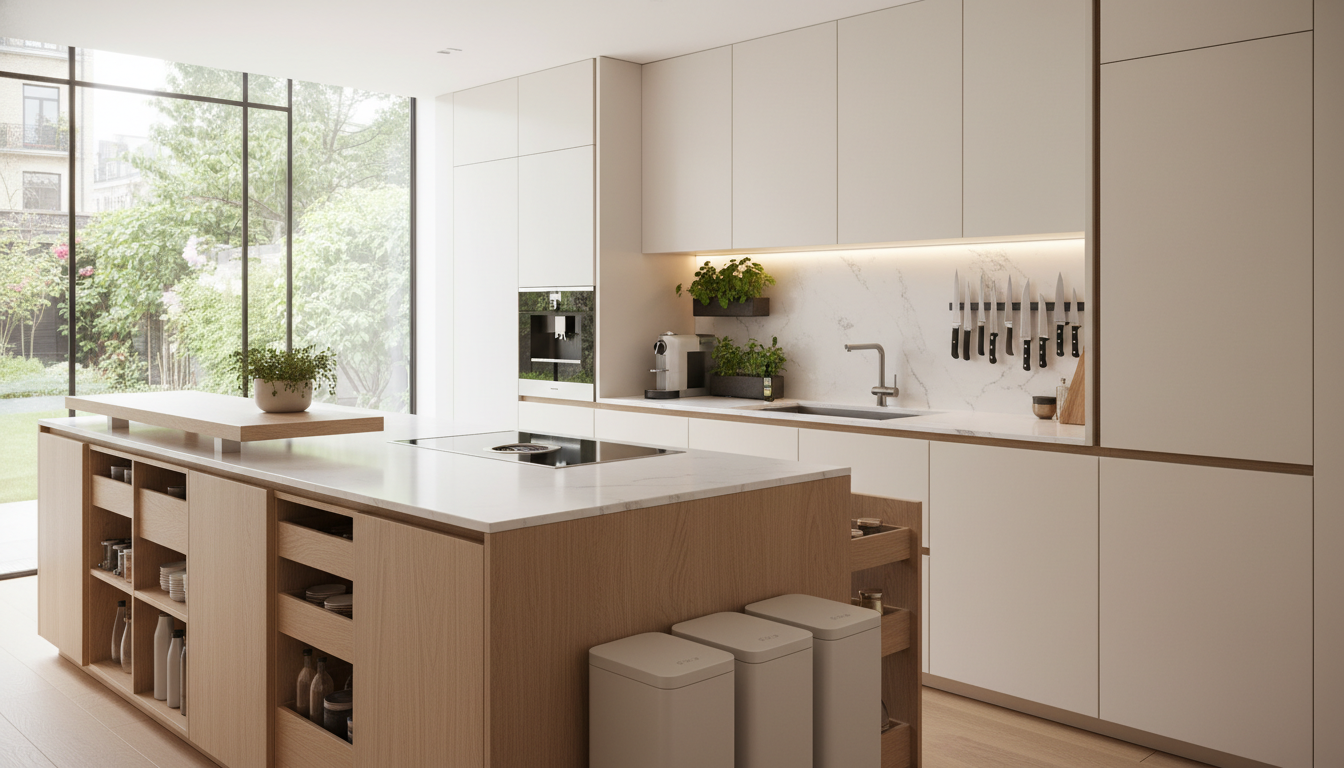
Maximizing space in small kitchens can be a challenge. Traditional kitchen islands often take up valuable floor space, making it difficult to navigate.
However, there are alternative solutions that can provide the same functionality and style without the need for a large, bulky island. Narrow kitchen island alternatives are designed to fit into tight spaces, making them perfect for small kitchens.
These alternatives can help maximize space while maintaining the aesthetic appeal of your kitchen.
Key Takeaways
- Alternative solutions can replace traditional kitchen islands.
- Narrow kitchen island alternatives are ideal for small kitchens.
- These alternatives help maximize space and maintain kitchen aesthetics.
- They provide the same functionality as traditional kitchen islands.
- Perfect for kitchens with limited floor space.
Understanding the Need for Alternatives
In smaller kitchens, the traditional kitchen island may not be practical, necessitating alternative solutions. Homeowners often face the dilemma of wanting additional counter space and storage without compromising the kitchen’s functionality.
Narrow kitchen islands can be a viable solution, offering several benefits. They provide extra counter space for food preparation, additional storage for kitchen utensils and ingredients, and can even serve as a breakfast bar or dining area in some cases.
Benefits of Narrow Kitchen Islands
Narrow kitchen islands are particularly advantageous in smaller kitchens. They can help to:
- Maximize available space
- Enhance kitchen functionality
- Provide additional storage
- Create a social hub for casual dining or food preparation
For instance, a narrow kitchen island can be equipped with drawers and cabinets to store kitchen essentials, keeping the countertops clutter-free. Moreover, they can be designed to fit snugly into corners or against walls, making the most of the available space.
Common Challenges with Space
Despite the benefits, incorporating a kitchen island into a small kitchen can be challenging. Common issues include:
- Limited floor space
- Navigating around the island
- Ensuring the island does not obstruct the workflow
To overcome these challenges, it’s essential to carefully plan the kitchen layout. This involves measuring the available space, considering the workflow, and selecting an island design that complements the existing kitchen configuration.
Recognizing Your Kitchen Layout
Understanding your kitchen’s layout is crucial in determining the best alternative to a traditional kitchen island. Consider the following factors:
| Factor | Description | Consideration |
|---|---|---|
| Kitchen Size | The overall dimensions of your kitchen | Measure the length, width, and any obstacles |
| Workflow | The path you take through the kitchen | Ensure the island doesn’t obstruct this path |
| Storage Needs | The type and amount of storage required | Consider drawers, cabinets, and shelves |
By carefully assessing these factors, you can identify the most suitable narrow kitchen island alternative for your space, enhancing both functionality and aesthetics.
Compact Kitchen Carts for Versatility
Compact kitchen carts provide the flexibility and mobility that traditional kitchen islands often lack. These carts are designed to be space-efficient, making them ideal for kitchens where every inch counts.
Types of Kitchen Carts
Kitchen carts come in a variety of styles and materials, from modern and sleek to traditional and rustic. Some are designed with storage in mind, featuring drawers and cabinets, while others are more minimalist, focusing on countertop space.
Key Types Include:
- Storage-focused carts with drawers and cabinets
- Minimalist designs emphasizing countertop space
- Utility carts with additional features like built-in trash cans or spice racks
Choosing the Right Style
Selecting the right kitchen cart involves considering your kitchen’s decor and your specific needs. For a modern kitchen, a cart with a sleek, stainless steel or glass finish might be appropriate. For a more traditional kitchen, a wooden cart could be a better fit.
Consider the following when choosing a style:
- The color and material of your existing kitchen furniture
- The overall aesthetic of your kitchen (modern, traditional, rustic)
- Any specific features you need (storage, countertop space, mobility)
Maximizing Functionality
To get the most out of your kitchen cart, consider how you can maximize its functionality. This might involve using it as a additional countertop during meal prep, or utilizing its storage capabilities to keep your kitchen organized.
Tips for Maximizing Functionality:
- Use the cart as a mobile workstation during cooking
- Utilize the storage options to keep frequently used items within easy reach
- Consider a cart with built-in features like a built-in cutting board or trash can
Beautiful Bistros: Creating a Cozy Nook
For kitchens with limited space, a bistro nook offers a stylish and functional alternative to traditional islands. This cozy seating area can become the heart of your kitchen, providing a warm and inviting spot for meals and conversation.
Selecting the Right Furniture
When creating a bistro nook, selecting the right furniture is crucial. You’ll want to choose a compact table and chairs that fit your kitchen’s style and layout. Consider slim kitchen island options that can double as a dining table or a workspace.
Some popular choices for bistro nook furniture include:
- Round or oval tables to save space
- Chairs with a slim profile or stools that can be tucked under the table
- Benches or banquettes for a cozy, built-in feel
| Furniture | Space-Saving Features | Style |
|---|---|---|
| Round Table | Compact footprint | Modern, Traditional |
| Slim Chairs | Narrow profile | Contemporary, Minimalist |
| Banquette | Built-in seating | Cozy, Rustic |
Design Tips for a Homely Atmosphere
To create a homely atmosphere in your bistro nook, consider incorporating stylish narrow island ideas for kitchens that enhance the overall aesthetic. Add warm lighting, comfortable cushions, and decorative elements that reflect your personal style.
Some design tips include:
- Use warm-toned lighting to create a cozy ambiance
- Add plush cushions and throws to your seating area
- Incorporate decorative elements, such as artwork or plants, to personalize the space
By following these tips and selecting the right furniture, you can create a beautiful bistro nook that becomes the heart of your kitchen.
Foldable and Expandable Tables
In the quest for efficient kitchen island substitutes, foldable and expandable tables stand out. These versatile designs cater to the needs of homeowners with limited kitchen space, offering functionality without the permanence of traditional kitchen islands.
Pros and Cons of Foldable Designs
Foldable tables are a boon for kitchens where space is at a premium. The primary advantage of these designs is their ability to be easily stowed away when not in use, thereby freeing up valuable kitchen real estate. However, it’s essential to consider the potential drawbacks, such as limited durability and the need for careful handling to avoid damage.
The benefits of foldable designs include:
- Convenience: Easily fold and store when not in use.
- Flexibility: Can be used for various purposes, from meal prep to dining.
- Space Efficiency: Ideal for small kitchens.
On the other hand, some of the cons to consider are:
- Limited Durability: Frequent folding and unfolding can lead to wear and tear.
- Stability Issues: Some foldable tables may not be as stable as fixed tables.
Best Uses for Expandable Tables
Expandable tables offer another dimension of flexibility for kitchen spaces. These tables can be extended to accommodate more guests or reduced to a compact size for everyday use. They are particularly useful for homeowners who frequently host dinner parties or have varying needs for kitchen counter space.
| Feature | Foldable Tables | Expandable Tables |
|---|---|---|
| Space Efficiency | High | Variable |
| Flexibility | High | High |
| Durability | Moderate | High |
By understanding the pros and cons of foldable and expandable tables, homeowners can make informed decisions about the best space-saving kitchen island designs for their needs.
Utilizing Wall-Mounted Options
In the quest for compact kitchen island solutions, homeowners are turning to wall-mounted alternatives. These options not only save floor space but also provide additional storage and counter space.
Shelves vs. Mountable Tables
When considering wall-mounted options, homeowners often debate between shelves and mountable tables. Shelves are ideal for storage and displaying kitchenware, while mountable tables can serve as a temporary workspace or breakfast bar.
The choice between the two largely depends on the kitchen’s layout and the homeowner’s needs. For instance, a mountable table can be folded up against the wall when not in use, making it a great space-saving solution.
How to Properly Install Wall-Mounted Solutions
Installing wall-mounted solutions requires careful planning and execution. First, it’s crucial to measure the wall space accurately to ensure the chosen fixture fits perfectly.
Next, homeowners should select the appropriate hardware for the installation. This includes choosing the right screws and anchors that can support the weight of the wall-mounted solution.
- Use a level to ensure the fixture is straight.
- Drill pilot holes to avoid damaging the wall.
- Tighten the screws firmly to secure the fixture.
By following these steps, homeowners can enjoy their wall-mounted kitchen solutions without worrying about stability or safety.
Modular Furniture Solutions
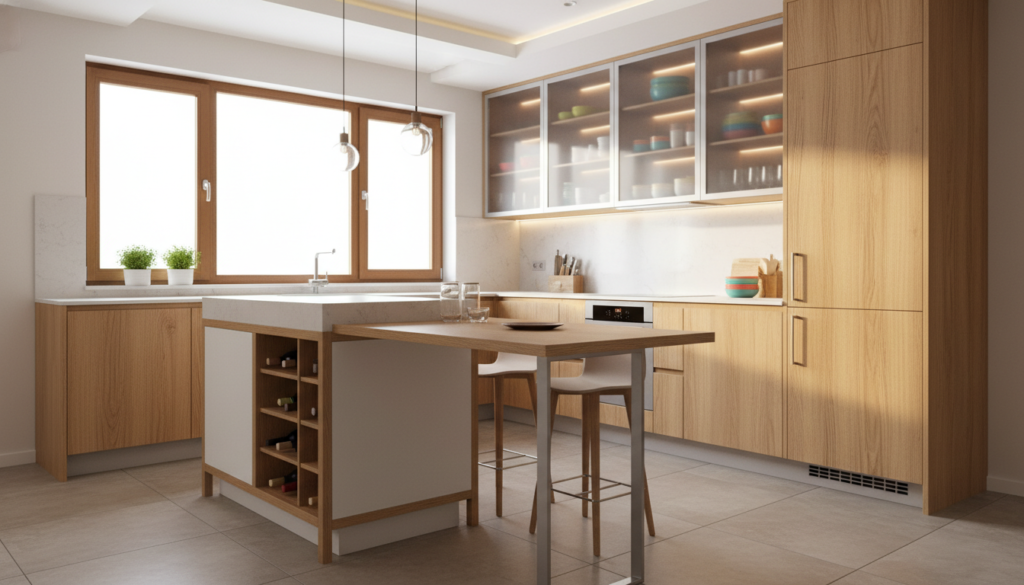
In the quest for practical kitchen island alternatives, modular furniture solutions stand out for their versatility and style. Modular designs offer a highly customizable approach to kitchen furniture, allowing homeowners to create a layout that perfectly suits their needs.
Benefits of Modular Designs
One of the primary advantages of modular furniture is its adaptability. Unlike traditional kitchen islands, modular units can be easily rearranged or expanded as needed. This flexibility is particularly valuable in kitchens where space is limited or where the layout needs to accommodate different functions.
Modular designs also offer the benefit of customization. Homeowners can select from a variety of modules to create a kitchen island that meets their specific needs, whether it’s additional storage, a cooking station, or a dining area.
Popular Brands to Consider
Several brands are renowned for their modular furniture solutions. IKEA is a popular choice for those looking for affordable and versatile modular kitchen furniture. Their designs are not only functional but also stylish, making them a great option for homeowners seeking to create a modern kitchen.
Another brand to consider is Room & Board, which offers high-quality, customizable modular furniture that can be tailored to fit any kitchen layout. Their designs are known for their sleek, contemporary aesthetic, making them ideal for those looking to achieve a stylish narrow island idea for their kitchen.
Repurposed Furniture Ideas
Breathing new life into old furniture by turning it into kitchen essentials is a fantastic way to personalize your space. This approach not only adds a touch of uniqueness to your kitchen but also contributes to sustainability by reusing existing materials.
Using Antique Dressers as Kitchen Islands
Antique dressers can be transformed into functional kitchen islands, providing additional storage and counter space. To achieve this, consider the following steps:
- Assess the dresser’s structure to ensure it can support the weight of kitchen items and appliances.
- Refinish or repaint the dresser to match your kitchen’s aesthetic.
- Add casters to make it mobile, if desired.
- Install a countertop or butcher block on top to create a functional workspace.
By repurposing an antique dresser, you can create a one-of-a-kind kitchen island that adds character and functionality to your kitchen.
Upcycling Nightstands for Extra Storage
Nightstands can be upcycled into useful kitchen storage units, perfect for holding cookbooks, spices, or kitchen utensils. Here are some ideas to get you started:
| Idea | Description |
|---|---|
| Add a drawer organizer | Maximize storage by installing dividers or baskets within the drawers. |
| Install a spice rack | Convert a nightstand into a spice station by adding a spice rack on the side or back. |
| Use as a mobile cart | Add casters to the nightstand to create a mobile storage cart that can be moved around the kitchen. |
Upcycling nightstands not only reduces waste but also adds a creative touch to your kitchen. By giving old furniture a new purpose, you can create efficient kitchen island substitutes that meet your specific needs.
When repurposing furniture, it’s essential to consider the durability and functionality of the piece. With a little creativity, you can turn old furniture into functional small kitchen island ideas that enhance your kitchen’s layout and aesthetic.
Free-Standing Kitchen Buffets
When it comes to practical kitchen island alternatives, free-standing buffets stand out for their functionality and style. These versatile pieces of furniture not only provide additional storage and countertop space but also serve as a stylish element in the kitchen.
Free-standing kitchen buffets are particularly beneficial in kitchens where space is limited. They offer a compact solution that doesn’t compromise on style or functionality. Unlike traditional kitchen islands, buffets are designed to be more storage-centric, making them ideal for kitchens that need extra shelving and cabinet space.
Key Features to Look For
When selecting a free-standing kitchen buffet, there are several key features to consider. First, assess the storage capacity. Look for buffets with adjustable shelves, drawers, and cabinets to accommodate your kitchen essentials.
- Countertop material and durability
- Number and type of storage compartments
- Overall size and scale in relation to your kitchen
- Style and finish to match your kitchen decor
Comparison with Traditional Islands
While traditional kitchen islands are popular for their multi-functionality, free-standing buffets offer unique advantages. The primary difference lies in their design focus: buffets prioritize storage and display, whereas islands often serve as a central workstation.
| Feature | Free-Standing Buffet | Traditional Island |
|---|---|---|
| Storage Capacity | High | Variable |
| Countertop Space | Variable | High |
| Display Space | High | Low |
As shown in the table, free-standing buffets excel in storage and display capabilities, making them an excellent choice for kitchens that need these features.
In conclusion, free-standing kitchen buffets are a stylish and practical alternative to traditional kitchen islands, especially for those seeking compact kitchen island solutions. By considering the key features and benefits outlined above, homeowners can make an informed decision that enhances their kitchen’s functionality and aesthetic.
Rolling Islands for Flexibility
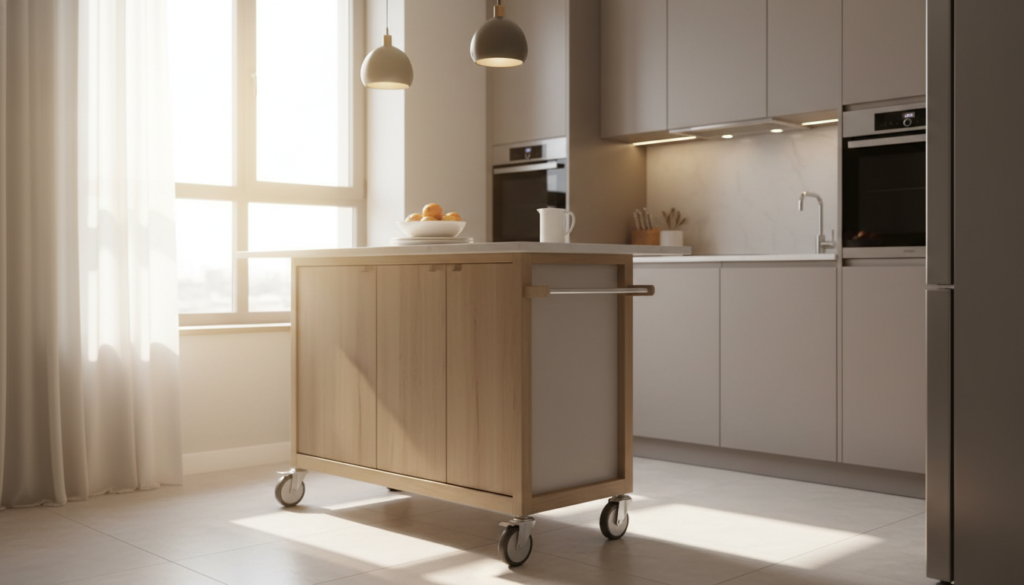
Maximizing kitchen functionality without sacrificing mobility is achievable with rolling islands. These versatile units can be easily moved around, providing additional counter space and storage as needed.
Features of Rolling Kitchen Islands
Rolling kitchen islands come with several features that make them an attractive option for kitchens of all sizes. Some of the key features include:
- Mobility: Equipped with wheels, these islands can be moved to different parts of the kitchen or even to other rooms.
- Versatility: Many rolling islands come with adjustable shelves, drawers, and cabinets, allowing for customized storage.
- Multi-functionality: Some models include built-in appliances or workstations, enhancing their utility.
Best Practices for Using Rolling Models
To get the most out of a rolling kitchen island, consider the following best practices:
- Assess Your Space: Measure your kitchen to determine the ideal size and placement for your rolling island.
- Choose the Right Style: Select a design that complements your kitchen’s décor and meets your functional needs.
- Utilize Locking Wheels: Ensure that your island has locking wheels to prevent it from moving unintentionally.
Here’s a comparison of different types of kitchen islands, including rolling models:
| Feature | Traditional Island | Rolling Island |
|---|---|---|
| Mobility | Limited | High |
| Versatility | Moderate | High |
| Space Requirement | Fixed | Flexible |
By incorporating a rolling kitchen island into your kitchen design, you can enjoy the benefits of additional counter space, storage, and flexibility. Whether you’re working with a small kitchen or a larger one, rolling islands offer a practical solution for enhancing your kitchen’s functionality.
Multi-functional Kitchen Benches
For kitchens where space is at a premium, multi-functional benches offer a versatile alternative to traditional islands. These benches are designed to provide additional seating and storage, making them an efficient kitchen island substitute.
Why Choose a Kitchen Bench?
A kitchen bench can serve multiple purposes, from a casual dining area to a storage unit. The key benefits include:
- Additional seating for family and guests
- Storage compartments for kitchen utensils and supplies
- Space-saving design that doesn’t compromise on functionality
By incorporating a multi-functional bench, homeowners can enjoy a more organized and spacious kitchen environment.
Ideal Designs for Small Spaces
When it comes to stylish narrow island ideas for kitchens, multi-functional benches are particularly effective in small spaces. Their compact design allows for easy integration into tight kitchen layouts.
Here are some popular designs:
| Design Feature | Description | Benefit |
|---|---|---|
| Storage Underneath | Benches with lift-top or drawers | Maximizes storage |
| Backless Design | Allows for easy access to surrounding areas | Enhances kitchen workflow |
| Cushioned Seating | Provides comfort for dining and lounging | Improves usability |
By choosing the right multi-functional kitchen bench, homeowners can achieve a more efficient, stylish, and functional kitchen space.
Using the Perimeter: Creating a Breakfast Bar
Utilizing the perimeter of your kitchen for a breakfast bar is an innovative solution for narrow kitchen island alternatives. This approach not only maximizes space but also adds functionality and aesthetic appeal to your kitchen.
Integrating a Breakfast Bar into Your Kitchen
To integrate a breakfast bar into your kitchen layout, consider the flow and existing design. A breakfast bar can serve as a small kitchen island idea by providing additional counter space and seating without the need for a traditional island.
When planning, think about the height and seating options that will work best for your kitchen. The bar should be comfortable for both standing and sitting, depending on your preference.
Ideal Bar Height and Seating Options
The ideal height for a breakfast bar depends on whether you plan to have stools or chairs. A standard counter-height bar is around 36 inches, suitable for stools. For a more traditional bar experience, consider a height of 42 inches.
- For counter-height bars (36 inches), use stools with a seat height of around 24-27 inches.
- For bar-height bars (42 inches), stools with a seat height of 30-33 inches are appropriate.
Comfortable seating and adequate legroom are crucial. Ensure there’s enough space between the bar and any wall or backsplash for diners to sit comfortably.
Conclusion: Finding Your Perfect Alternative
As we’ve explored throughout this article, there are numerous practical kitchen island alternatives that can enhance the functionality and aesthetic of your kitchen, even in the most compact spaces. By considering space-saving kitchen island designs, you can create a more efficient and enjoyable cooking environment.
Optimizing Your Kitchen Space
To make the most of your kitchen layout, it’s essential to measure your space carefully and choose multi-functional furniture that serves more than one purpose. This approach will help you maximize your kitchen’s potential while maintaining a clutter-free atmosphere.
Implementing Your Chosen Solution
Whether you opt for a compact kitchen cart, a foldable table, or a repurposed furniture piece, the key to success lies in selecting a solution that aligns with your kitchen’s unique needs and your personal style. By doing so, you’ll be able to enjoy a more streamlined and functional kitchen that meets your needs.